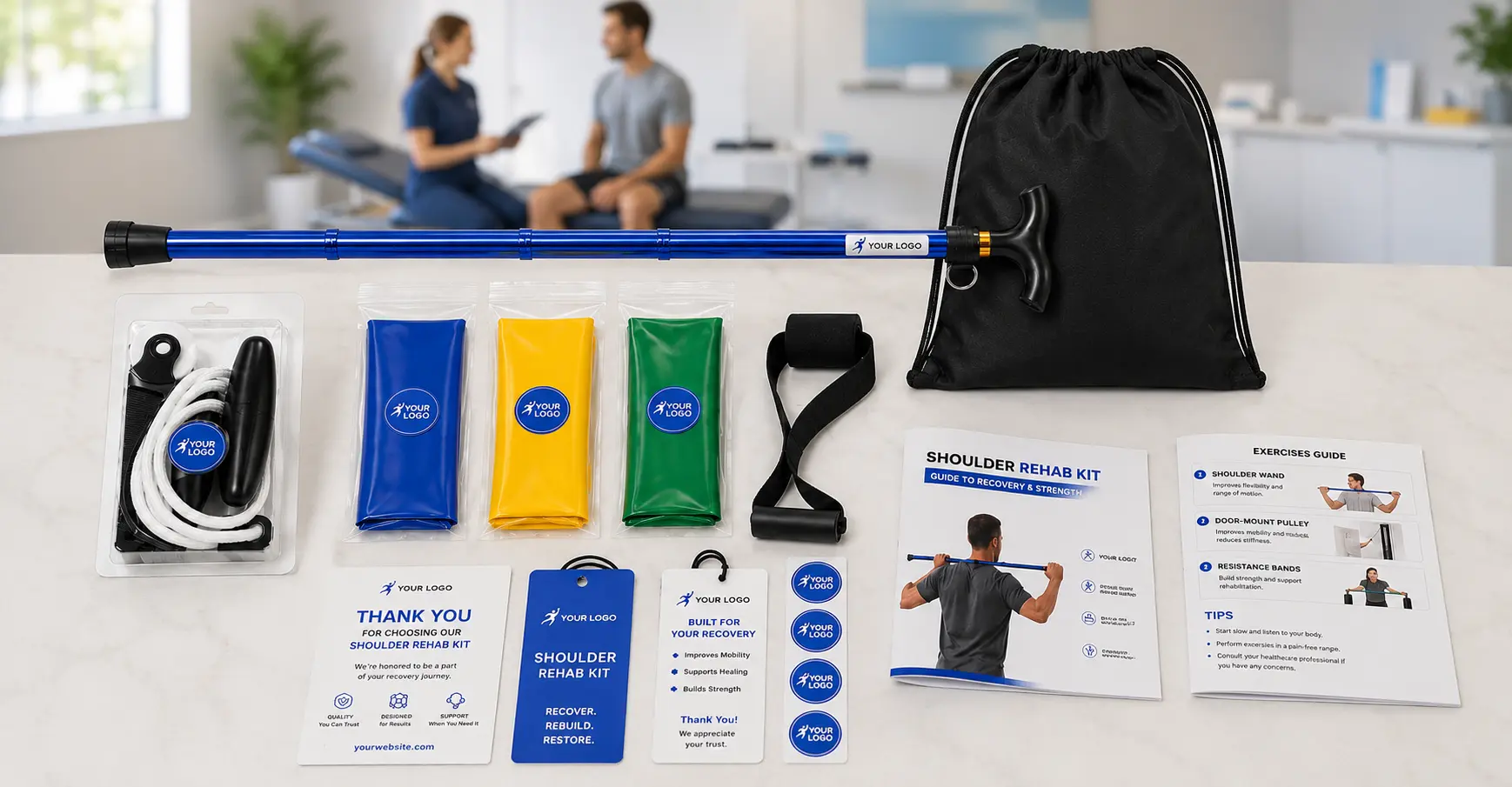
Walk into most physical therapy clinics, and you’ll see the same few items over and over again: resistance bands, foam rollers, massage balls, and stretch straps.
That’s not a coincidence.
The best home exercise tools aren’t necessarily the most advanced or expensive. They’re the ones patients can use consistently between visits. In fact, many therapists would rather see a patient regularly using a simple resistance band than leaving a sophisticated recovery device untouched in a closet.
Here are some of the most useful tools commonly recommended for home exercise programs (HEPs).
1. Resistance Bands

Resistance bands are one of the most common retail items in PT clinics.
They are widely used in treatment sessions and easily carried into home exercise programs. Patients can use them for strength training, mobility work, and progressive rehabilitation across different body regions.
In production and sampling, resistance bands often appear “self-explanatory,” but real-world usage feedback from clinics reveals consistent misuse patterns—incorrect tension selection, anchoring errors, and overextension. Even during internal factory testing, different staff may interpret resistance levels differently without guidance.
At the same time, this is one of the most stable reorder SKUs across rehab kits and clinic giveaway programs because usage frequency stays high.
Why patients like them:
- Easy to use at home
- Require very little space
- Suitable for many body regions
- Simple to progress over time
2. Stretch Straps

Flexibility and range of motion are important parts of many rehabilitation programs. A stretch strap helps patients perform stretches more effectively without needing assistance from another person.
They are especially useful for hamstring and calf stretches, as well as shoulder mobility exercises.
Why patients like them:
- Simple and inexpensive
- Easy to learn
- Helpful for daily mobility routines
- Suitable for all ages
Many stretch straps also include printed exercise guides, making them even easier to use at home.
3. Foam Rollers

Foam rollers remain one of the most popular self-recovery tools available.
Patients commonly use them to reduce muscle tightness, improve mobility, and support recovery after exercise. While a foam roller won’t replace hands-on treatment, it can help patients maintain progress between therapy sessions.
Foam roller performance differences are often underestimated at the ordering stage. EVA/PE materials feel softer and more forgiving, while EPP high-density rollers behave significantly firmer in compression tests. In practice, first-time users often only understand the difference after physically testing both types side by side.
From sourcing experience, clinics sometimes request “standard foam roller,” but usage feedback later shows preference shifts depending on patient type (sports recovery vs general rehab).

In this image: An EVA foam roller
Why patients like them:
- Easy self-massage tool
- Helps relieve muscle tension
- Useful before and after exercise
- Available in multiple sizes and densities
A compact foam roller is often one of the most versatile recovery products a patient can own.
4. Massage Balls and Trigger Point Balls

Sometimes a foam roller is too large for smaller muscle groups.
Massage balls allow patients to target specific areas such as the shoulder blade region, glutes, feet, or upper back. They are inexpensive, portable, and easy to keep at home, in the office, or in a gym bag.
Why patients like them:
- Affordable
- Highly portable
- Effective for localized muscle tension
- Easy to use throughout the day
Massage balls are often perceived as low-value add-on items during sourcing discussions, but real clinic usage shows they are among the most consistently retained patient tools. Unlike larger equipment, they rarely get abandoned because they are easy to store and use without instruction fatigue.
In our sourcing experiences, they are also commonly re-ordered in small batches due to loss, wear, or expansion of patient programs.
5. Hot / Cold Therapy Packs

Heat and cold remain common components of many home recovery routines.
Reusable therapy packs can help patients manage soreness, stiffness, and post-exercise discomfort between visits. While they are not a replacement for exercise, they are often a useful complement to a home program.
Why patients like them:
- Convenient pain management tool
- Reusable and affordable
- Easy to store
- Suitable for many conditions
Many patients appreciate having a simple recovery option available at home.
From a sourcing perspective, hot and cold therapy packs are straightforward. However, usage patterns in real clinic programs vary by patient type. Sports-focused programs tend to use them more frequently for recovery and post-training soreness management. Post-operative or general rehabilitation programs, on the other hand, typically emphasize more controlled, time-limited usage alongside exercise protocols.
6. KT Tape

KT tape (or Kinesiology tape) has become increasingly common in sports rehabilitation and recovery settings.
Some therapists incorporate it into treatment plans to provide support, enhance movement awareness, or manage symptoms during daily activities and exercise.
Why patients like them:
- Lightweight and comfortable
- Can be worn during activity
- Easy to carry
- Often used alongside exercise programs
Because application techniques vary, patients should always follow a therapist’s guidance.
The Best Tool Is the One Patients Actually Use
When it comes to home exercise programs, consistency usually matters more than complexity.
The most successful home rehab products tend to share a few characteristics:
- Affordable
- Easy to understand
- Easy to store
- Useful for daily routines
- Recommended by therapists
For clinics looking to support patient compliance, simple tools such as resistance bands, stretch straps, foam rollers, massage balls, and therapy packs often provide the greatest value. They help bridge the gap between clinic visits and encourage patients to stay engaged with their recovery process.
After all, the goal isn’t to give patients more equipment. It’s to give them practical tools that help them keep moving.