Home exercise programs are a core part of physical therapy.
The exercises patients perform between visits often play a major role in their recovery. Yet most therapists know that compliance can be difficult. Patients leave the clinic motivated, but daily life quickly gets in the way.
Instructions get misplaced. Exercises are forgotten. Recommended equipment is never purchased.
To help bridge this gap, many PT clinics use rehab kits as part of their patient education and home exercise programs.
A well-designed rehab kit doesn’t replace professional treatment. Instead, it makes it easier for patients to continue their recovery outside the clinic.
Why Home Exercise Programs Matter
A physical therapy visit may last 30 to 60 minutes.
The rest of the week is spent at home.
That’s why home exercise programs are so important. The goal is not simply to give patients exercises to perform. The goal is to help them build consistent habits that support recovery between appointments.
The challenge is that even simple exercises can be difficult to maintain when patients lack the right tools or clear instructions.
This is where rehab kits can help.
What Is a Rehab Kit?
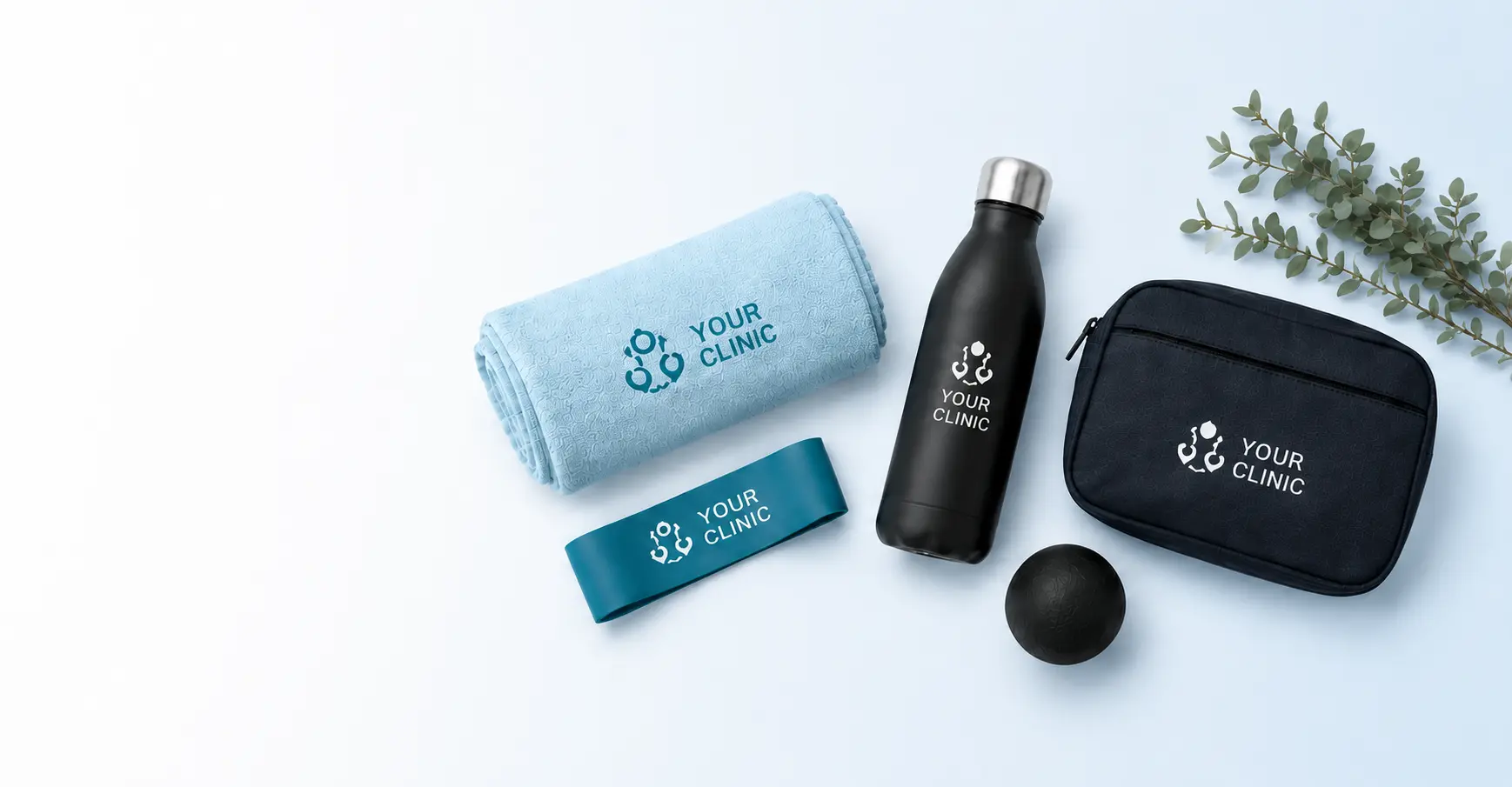
A rehab kit is a collection of products selected to support a specific exercise program or recovery goal.
Rather than asking patients to purchase items separately, clinics can provide a ready-to-use package that contains the tools most commonly used during treatment and home exercise.
Depending on the program, a rehab kit may include:
- Resistance bands
- Stretch straps
- Massage balls
- Foam rollers
- Hot or cold therapy packs
- Door pulleys
- Exercise guides or instruction cards
The exact contents vary, but the purpose remains the same: make it easier for patients to follow their program at home.
Making Home Exercise More Convenient
One common obstacle to compliance is convenience.
Patients may intend to buy a resistance band after their appointment but never get around to it. Others may not know which product to purchase or how to use it correctly.
Providing the necessary tools upfront removes several barriers at once.
Patients leave the clinic with everything they need to get started.
There is no searching online, comparing products, or making additional purchases.
The path from treatment to home exercise becomes much simpler.
Reinforcing What Patients Learn in the Clinic
Patients are more likely to use products they have already seen and practiced with.
Many therapists introduce rehab tools during treatment sessions before recommending them for home use.
For example, a therapist may demonstrate shoulder exercises using a resistance band or mobility work using a stretch strap.
When patients receive those same tools as part of a rehab kit, the exercises feel familiar.
This familiarity helps build confidence and reduces uncertainty.
Supporting Patient Engagement
Successful rehabilitation often requires active participation from the patient.
A rehab kit can serve as a physical reminder of the recovery process.
Instead of leaving the clinic with only verbal instructions, patients take home practical tools connected to their treatment plan.
Some clinics also include printed exercise guides or instruction cards to reinforce key exercises and recommendations.
The easier it is for patients to understand what they should do, the more likely they are to stay engaged.
Common Types of Rehab Kits
Many clinics organize rehab kits around specific body regions or recovery goals.
Examples include:
Shoulder Recovery Kit

Often includes resistance bands, a shoulder pulley, and exercise instructions.
Low Back Recovery Kit

May contain a stretch strap, massage ball, hot/cold pack, and mobility exercises.
Knee Recovery Kit

Typically includes resistance bands, balance training tools, and strengthening exercises.
General Recovery Kit
A basic combination of recovery tools suitable for a wider range of patients.
The best kit is not necessarily the largest one. In many cases, a few carefully selected products provide the greatest value.
Keeping Things Simple
One mistake some clinics make is overcomplicating home exercise programs.
More products do not always lead to better outcomes.
In fact, patients often achieve greater success when programs remain simple and easy to follow.
The most effective rehab kits usually contain practical tools that patients can begin using immediately.
A resistance band, stretch strap, and instruction card may be more valuable than a collection of rarely used equipment.
Looking Beyond the Products
A rehab kit should support a larger treatment strategy.
The products themselves are only part of the equation.
Clear instructions, patient education, and regular follow-up remain essential.
The goal is not to give patients more equipment.
The goal is to make recovery easier to understand and easier to continue between visits.
A Practical Way to Support Recovery
Home exercise programs work best when patients have the tools, knowledge, and confidence to continue exercising outside the clinic.
Rehab kits help bring those elements together.
By combining practical recovery tools with clear guidance, clinics can create a smoother transition from in-clinic treatment to at-home care.
And when home exercise programs are easier to follow, patients are more likely to stay engaged during the recovery process.
Sometimes, that’s what makes the biggest difference.