Home-based recovery is becoming a more important part of physical therapy and sports rehabilitation.
While in-clinic treatment remains essential, many clinics are placing greater emphasis on what happens between visits. The reason is simple: recovery does not only happen inside the clinic.
Patients spend far more time at home than in treatment sessions, which makes home exercise and self-managed recovery a key part of long-term outcomes.
Shift Toward Patient-Led Recovery
One of the most noticeable changes in recent years is the shift toward more patient-led recovery programs.
Instead of relying entirely on supervised sessions, clinics now design programs that patients can continue independently at home.
This shift is driven by several factors:
- Increased focus on long-term outcomes
- Limited in-clinic treatment time
- Growing awareness of patient compliance challenges
- Wider access to simple rehab tools and education materials
The result is a more balanced model where clinics guide recovery, and patients actively participate outside the clinic.
Simplicity Is Becoming More Important
As home-based recovery grows, simplicity has become a key design principle.
Clinics are increasingly avoiding overly complex home exercise programs in favor of:
- Fewer exercises with higher consistency
- Easy-to-understand instructions
- Practical, low-barrier rehab tools
The goal is not to overwhelm patients, but to make follow-through realistic in daily life.
This trend is also influencing the types of products clinics recommend, with a clear preference for simple, versatile tools.
Growth of Take-Home Rehab Kits
Another clear trend is the increasing use of structured take-home rehab kits.
Instead of sending patients home with separate recommendations, clinics are bundling tools into organized kits that support specific recovery goals.
Common examples include:
- Shoulder recovery kits
- Knee rehabilitation kits
- General mobility kits
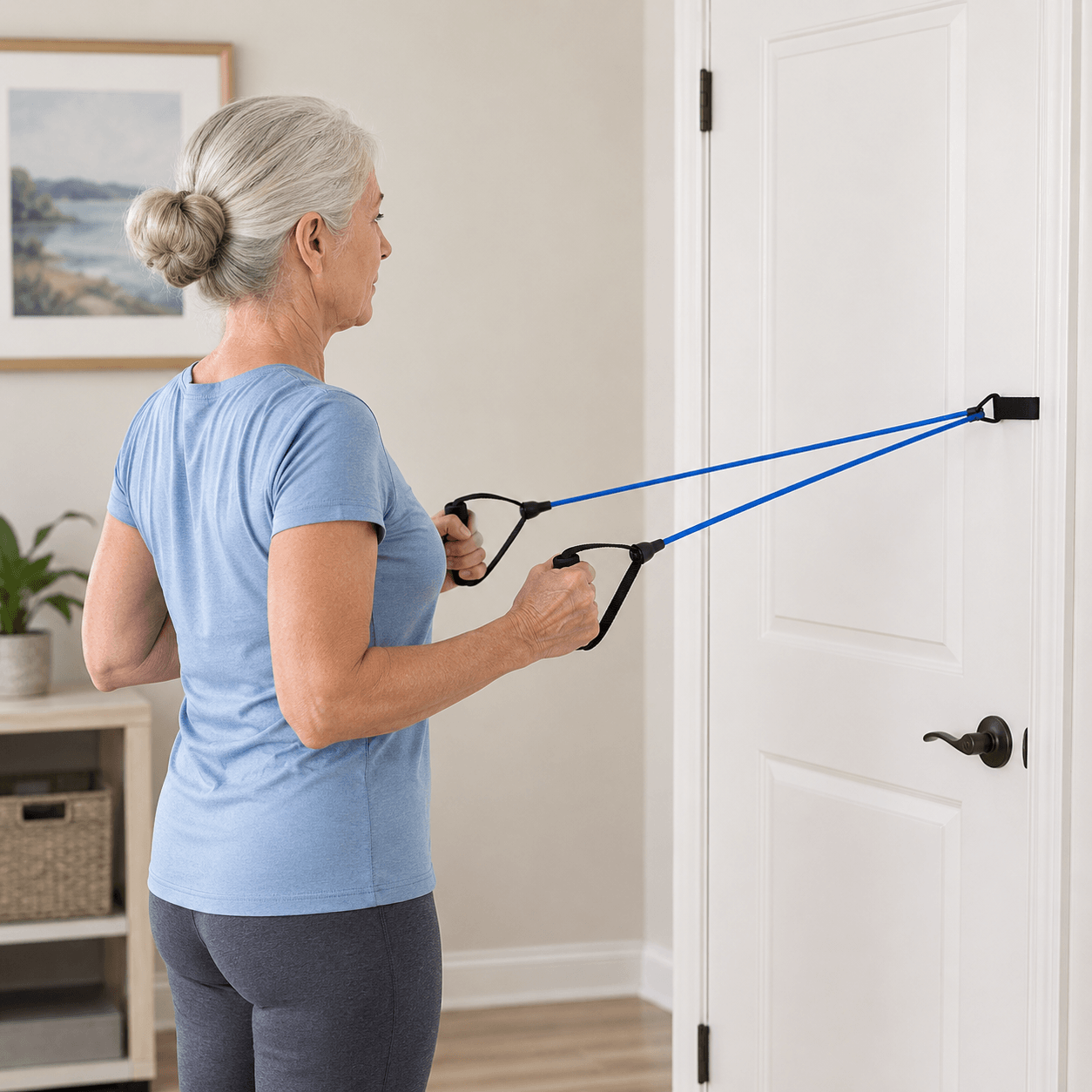
These kits typically combine basic tools such as resistance bands, stretch straps, massage balls, and instruction materials.
The appeal is convenience. Patients receive everything they need in one package, reducing confusion and improving consistency.
Increased Focus on Patient Compliance
Patient compliance remains one of the biggest challenges in rehabilitation.
Even well-designed programs can fail if patients do not follow them consistently.
This has led clinics to rethink how they structure home-based recovery by focusing more on:
- Ease of use
- Clear instructions
- Familiarity with tools used in the clinic
- Integration into daily routines
The trend is shifting from “more exercises” to “more sustainable habits.”
Expansion of Simple Recovery Tools
Home-based recovery programs rely heavily on simple, widely understood tools.
Products such as resistance bands, foam rollers, massage balls, and stretch straps continue to dominate because they are:
- Easy to use without supervision
- Low cost and widely available
- Suitable for a broad range of patients
- Flexible across different conditions
Rather than replacing clinical treatment, these tools extend its impact beyond the clinic environment.
Blending Education With Equipment
Another growing trend is the integration of education materials with physical tools.
Clinics are increasingly combining:
- Printed instruction cards
- QR-linked video guidance
- Branded rehab kits
- Simple step-by-step exercise sheets
This combination helps patients understand not just what to do, but how to do it correctly at home.
Final Thought
Home-based recovery programs are no longer a secondary part of physical therapy.
They are becoming a core extension of clinic care.
As clinics continue to refine how they support patients outside the clinic, the focus is shifting toward simplicity, consistency, and practical tools that patients actually use.
The most effective programs are not the most complex ones.
They are the ones patients can realistically follow in everyday life.